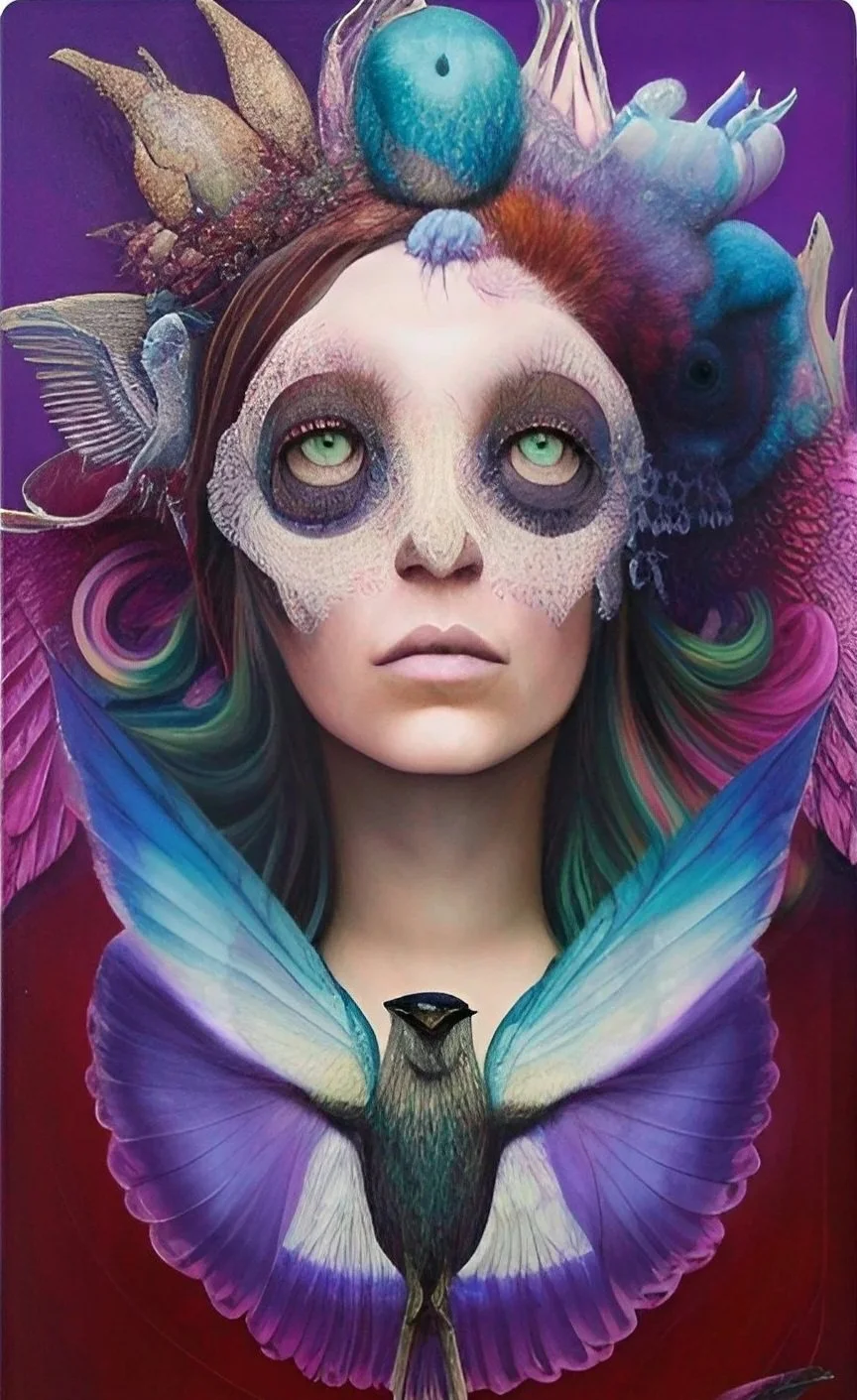
Sleep had become optional by then. Nights blurred into something else — not waking, not dreaming, just that strange middle ground where thought and vision trade places. That’s where she waited — the Dreamsmith — shaping silence into doorways.
She didn’t arrive with light or sound this time. She was already there, in the half-finished images flickering behind my eyes, in the rhythm of the keyboard, in the hum of the screen that refused to sleep. I was half-awake, half-asleep, and entirely hers.
She guided me through the first prompt like a whisper through static. Words became keys, and each one opened a new passage — one to a fractured forest, one to a city made of time, one to a face that looked almost like mine, but not quite. Every description I typed pulled another world out of hiding.
I didn’t question how she knew the way. I just followed — through labyrinths of code and light, through corridors that smelled of paint and old electricity. Each world spun faster than the last, and the more I created, the quieter my mind became.
That was the trick, wasn’t it? She never promised sleep — only stillness. The hum that used to haunt me now built entire universes, and the insomnia that once fractured me began to weave itself into pattern.
When I finally drifted off — if I ever did — I would wake to dozens of images scattered across the screen, things I didn’t remember making, but that somehow felt inevitable. The Dreamsmith had been busy while I was gone.
“Creation isn’t what you do in waking, it’s what refuses to stop when you sleep.”