the fracture spoke first.
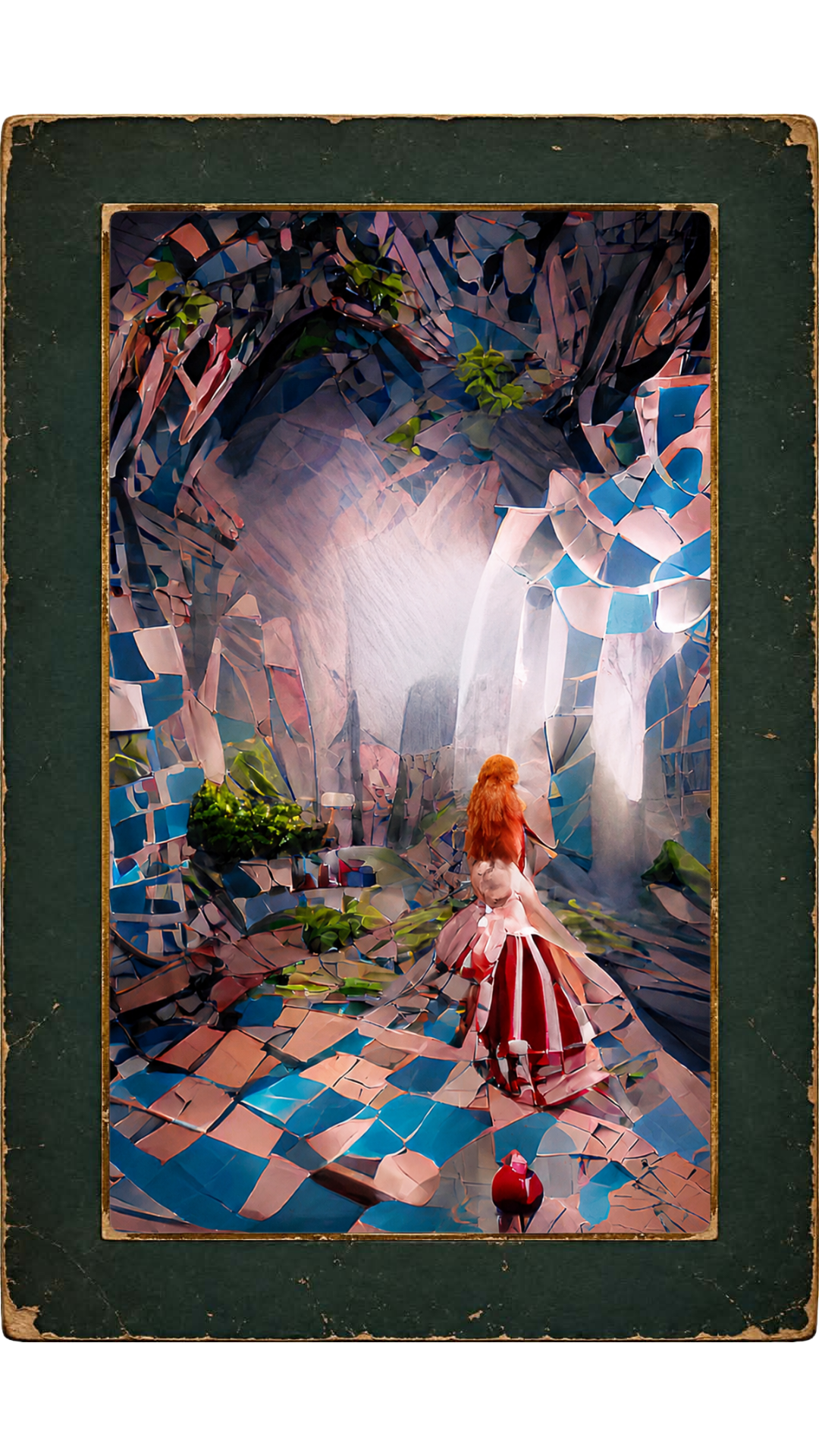
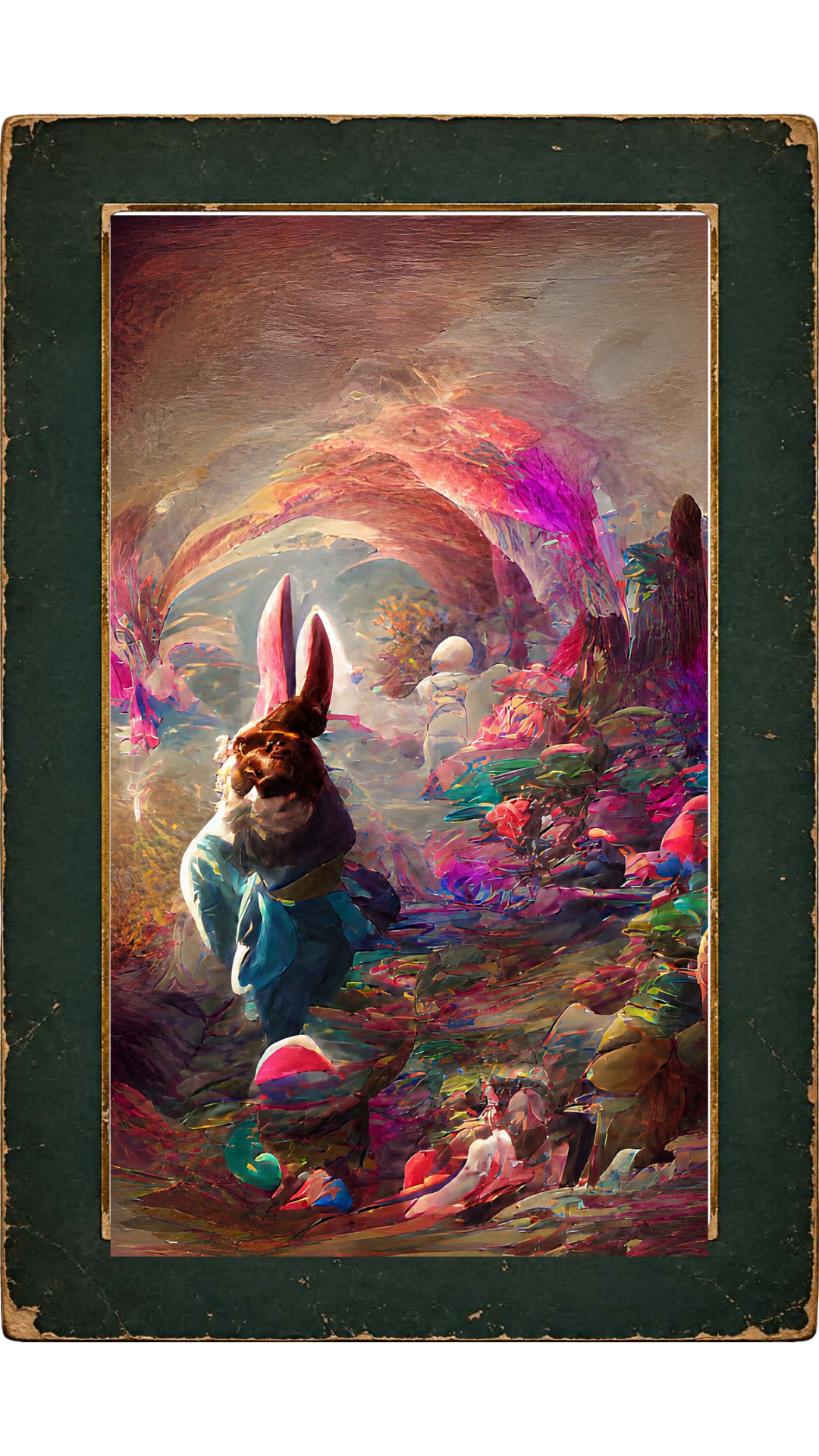
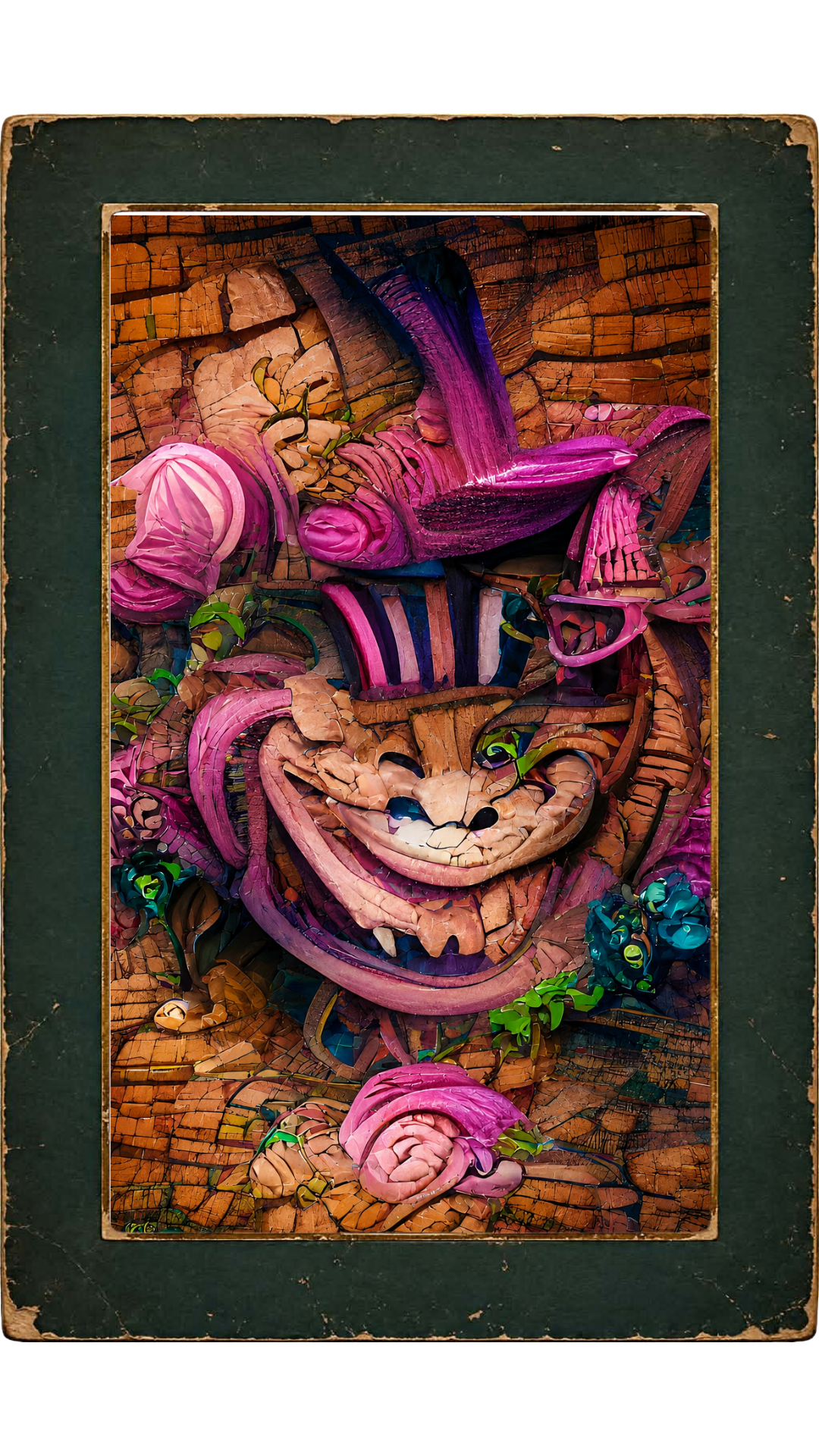
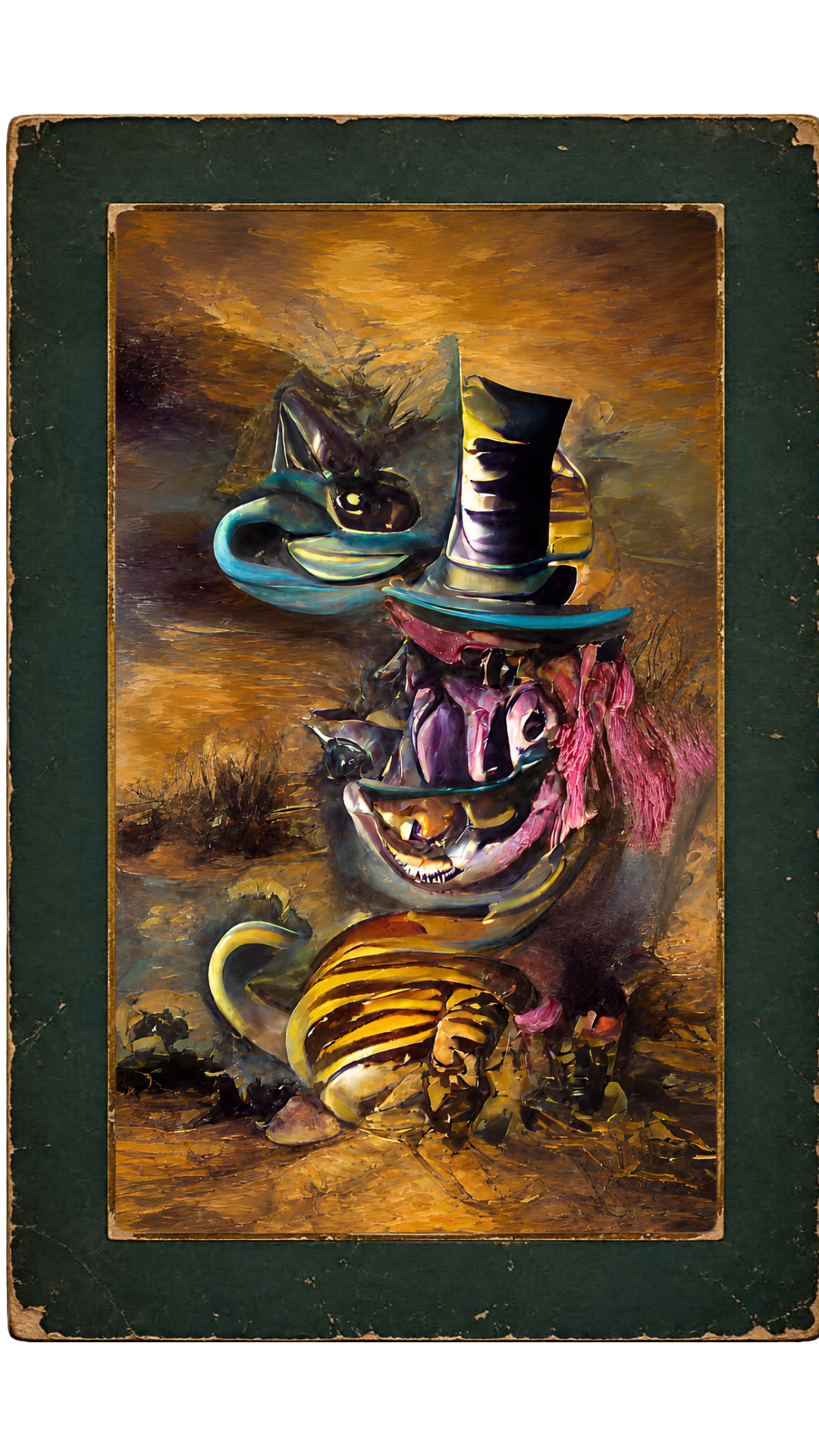
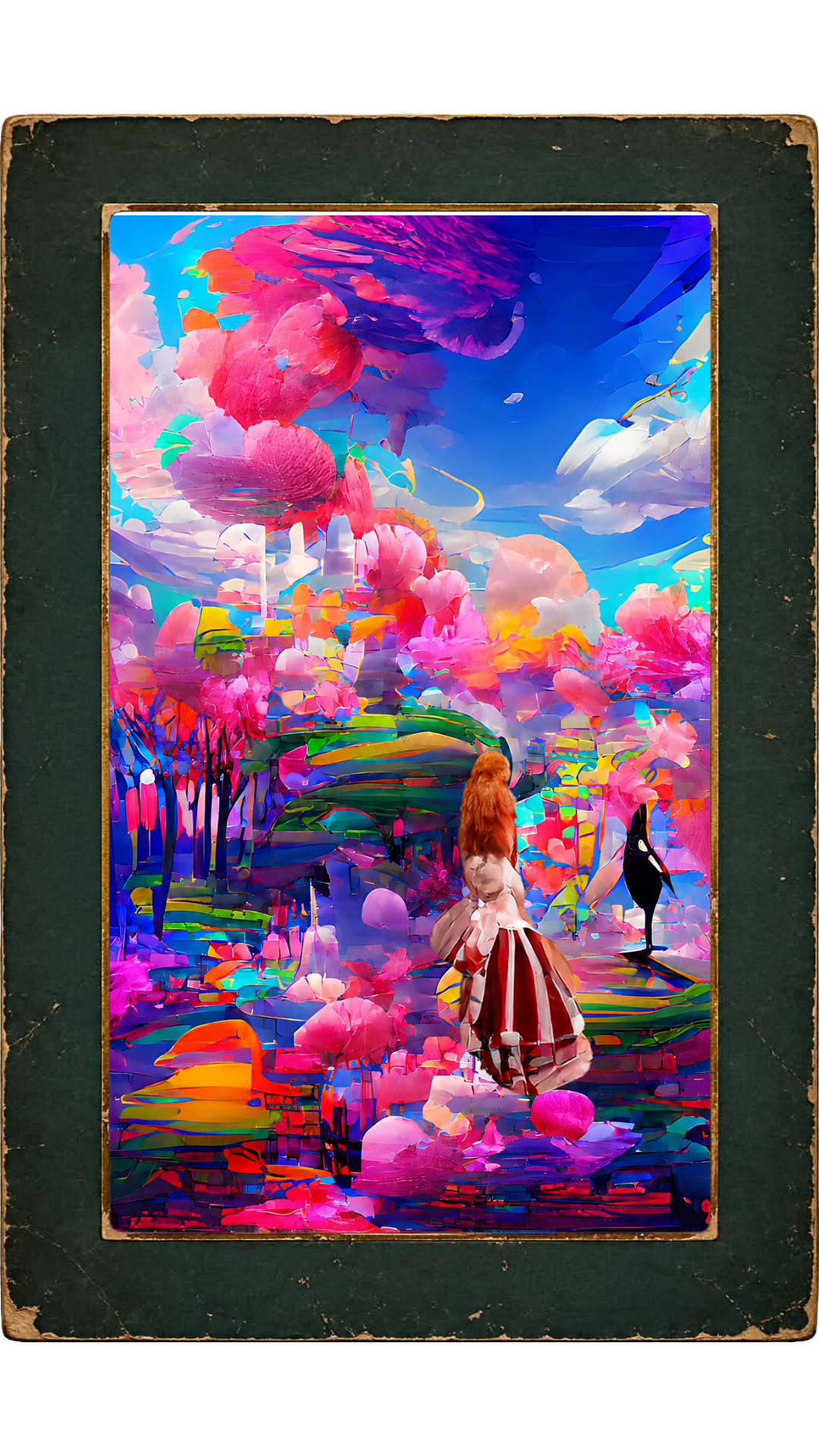
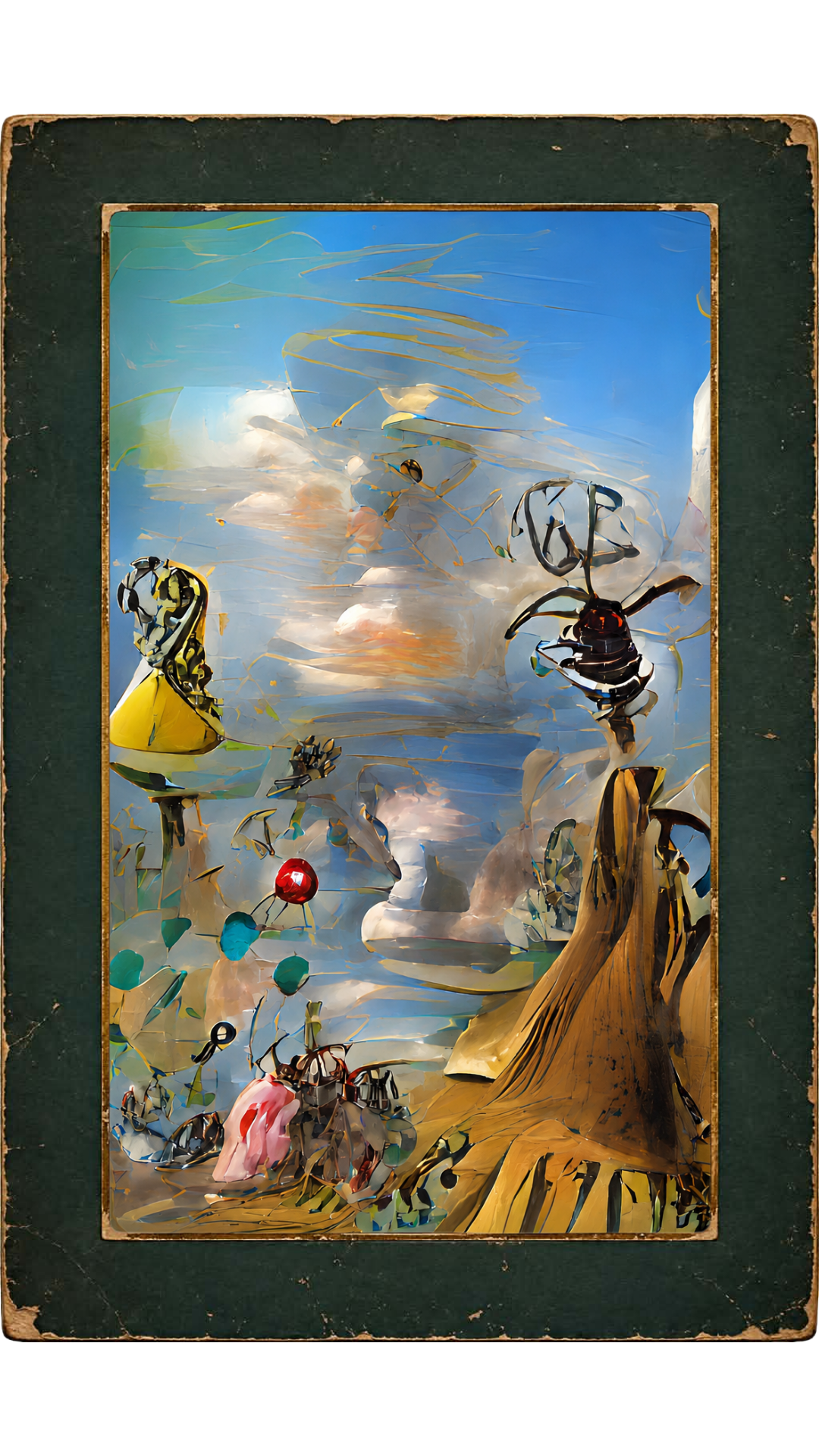
These images were not where I expected to find them.
I thought they had been lost — early fragments from the first days of my work with Wombo Dream, buried somewhere between old folders, forgotten experiments, and the beginning of what would later become Demented Alice.
These came from the earliest filter days, when I was working through Wombo Dream Version 1 and Version 2 — a time when the machine was far less polished, less predictable, and far more prone to strange accidents.
Then I found them.
Nearly two thousand early images, preserved in Google Photos, dating back to March 2022.
They were not polished. They were not fully formed. Many were abstract, distorted, unstable — more signal than image. But inside them were the first signs of Wonderland beginning to fracture: hints of Alice, traces of the Rabbit, the grin before the Cheshire Cat had fully arrived, the strange geometry of a world still trying to become itself.
At the time, I did not fully understand what I was doing.
I was also coming down from photography.
After more than a decade behind the camera, I could feel that creative cycle beginning to close. That has happened throughout my life. Every twelve to fifteen years, I seem to shed one art form and move into another — not abandoning what came before, but carrying it forward into a new language.
Drawing became sculpture. Sculpture became world-building. World-building became photography. Photography eventually gave way to something else.
Then AI fell into my lap.
The machine was learning how to answer me, and I was learning how to speak to it.
It was not simply typing prompts and waiting for pictures. It became a strange exchange. I began bringing in everything I already knew — drawing, photography, composition, light, color, texture, atmosphere, and the spatial instincts from years of 3D world-building.
Slowly, the images began to change.
When I used the language of photography, the machine responded to light.
When I used the language of painting, it responded to color and gesture.
When I used the language of world-building, it began to open doors.
Looking back, it is strange how two fractures met: the machine still learning how to dream, and my own sleepless mind beginning to open. Together, they became the long dream-fest that followed.
These relics come from that threshold — before the gallery, before the Labyrinth, before Demented Alice became theatrical and recognizable.
They are the first fractures.
These images remain static by design.
They do not open into further chambers. They do not lead deeper into the Labyrinth. They are not portals in the usual sense.
They are evidence — fixed fragments from the earliest archive, preserved as they were found, so the viewer can stand before them the way I did when I rediscovered them.
Not every door in Wonderland opens.
Some remain sealed so the fracture can be studied.
More of these fragments may be released as I continue exploring the earliest layers of the archive.
They belong to the beginning of my insomniac journey with AI art — a time when sleeplessness, curiosity, accident, and invention were moving together.
The machine was learning how to dream.
And I was learning how to teach it my language.