I was raised between countries, languages, and expectations. My parents came from Greece. I was born in Canada, then moved to Texas in the 1970s and placed into kindergarten without English, expected to find my way.
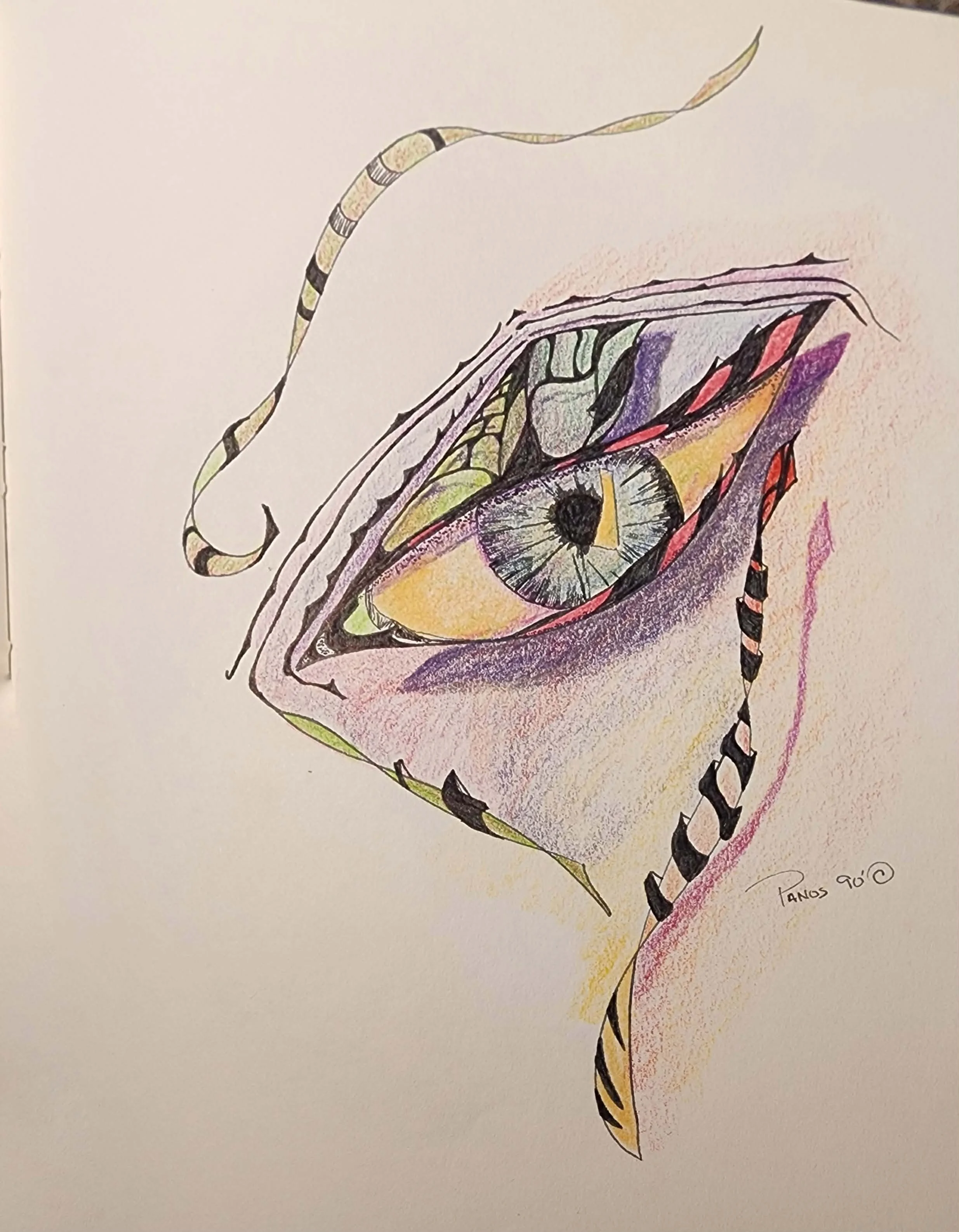
Some of my first memories are of sitting alone in my bedroom around the age of four, drawing. It is one of the few memories I still carry from Canada, and one of the clearest. Even then, I was already using imagination as a place to stand.
The paramythia — the old Greek fables — were never soft stories. They carried beauty and terror together. Somewhere inside them, I learned that imagination wasn’t decoration — it was endurance.
Art became my sanctuary early. In a world that was not always gentle, drawing offered a place where I could breathe and feel safe inside myself.
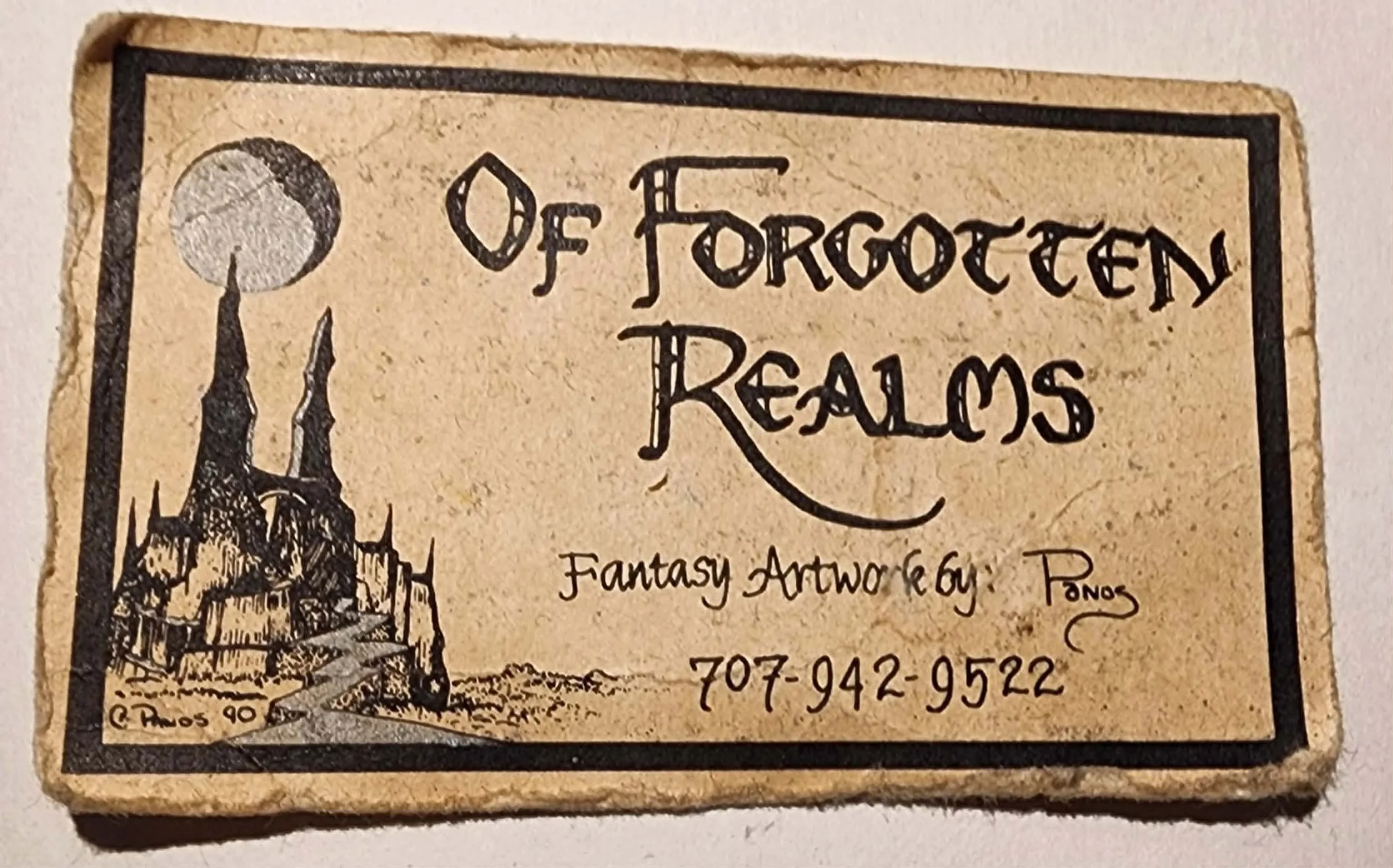
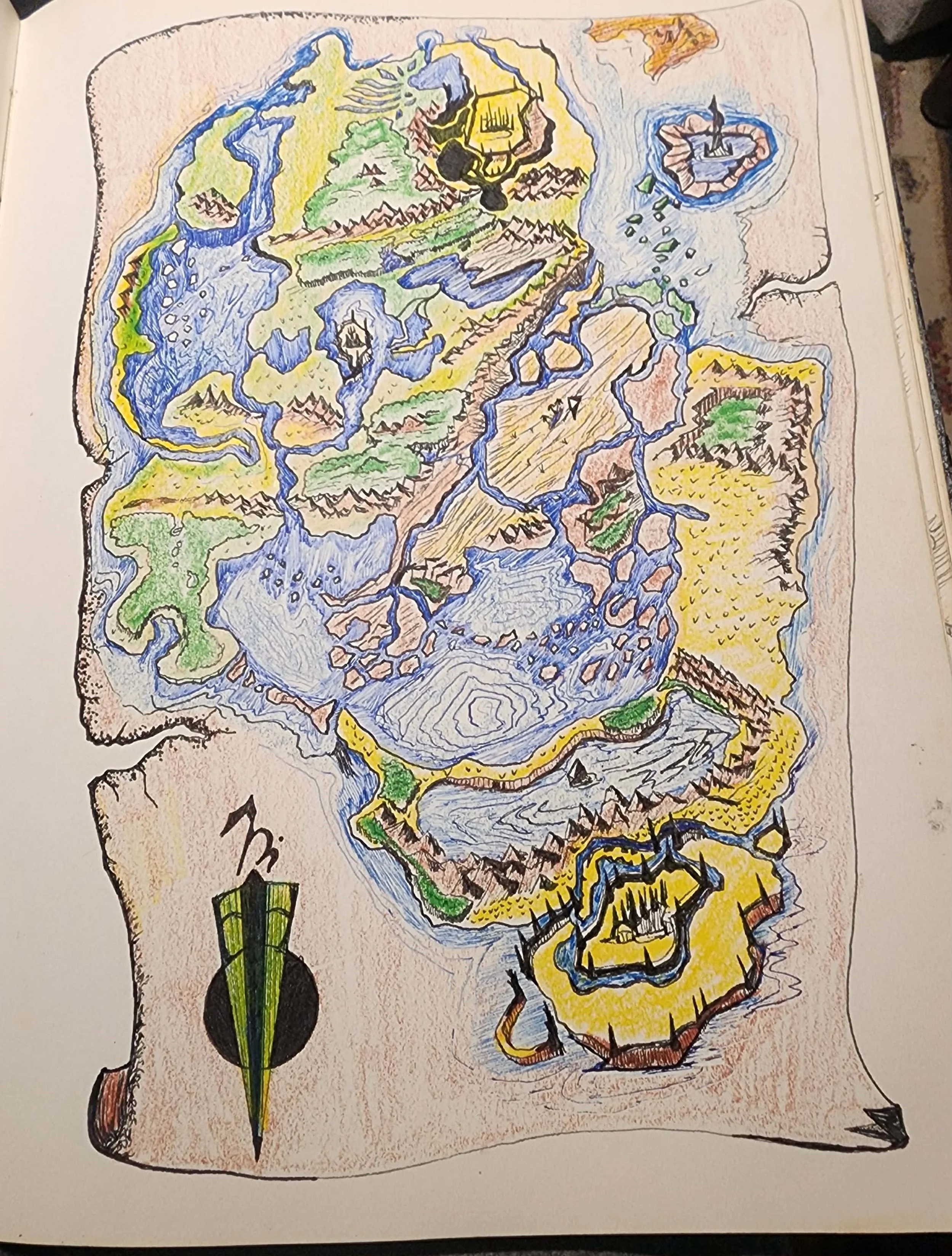
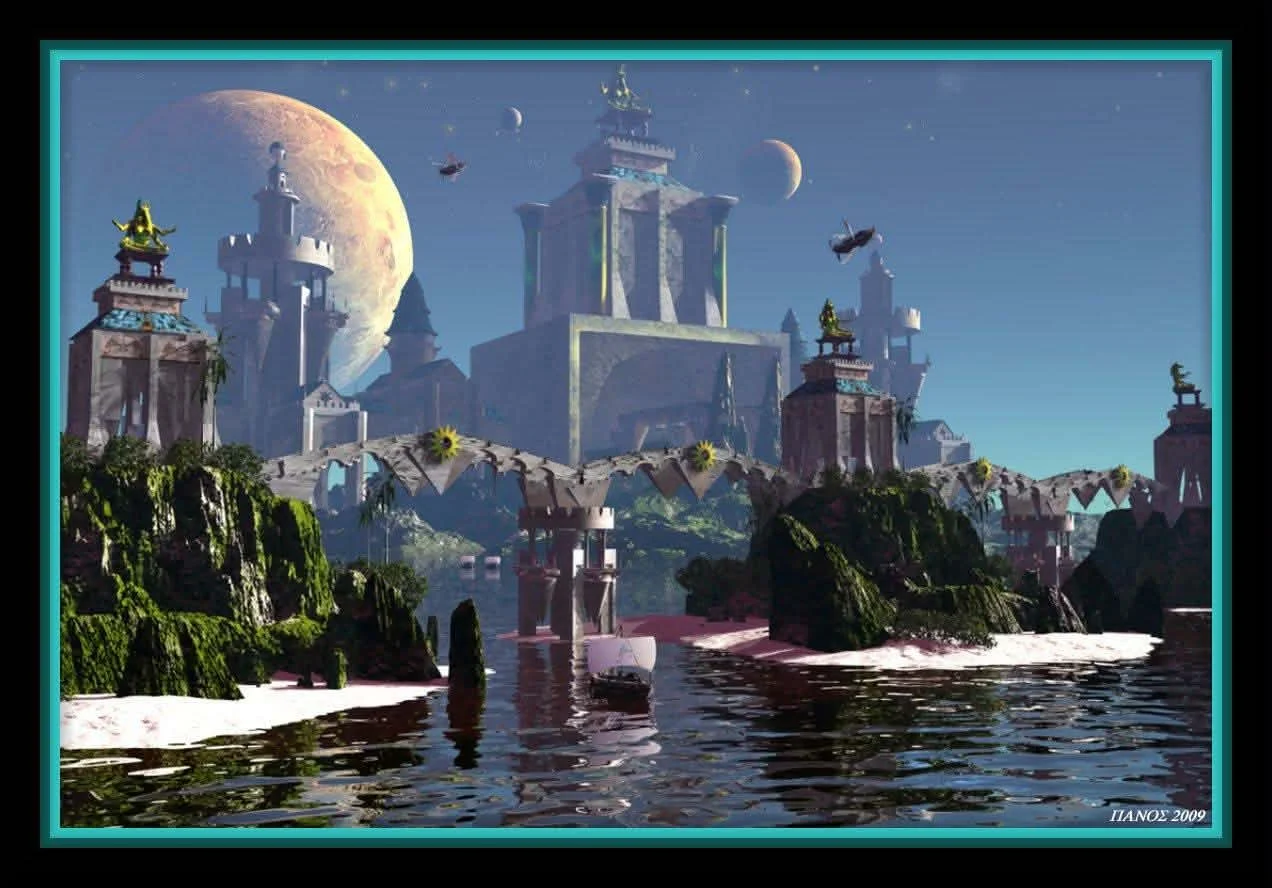
As a child, I sketched maps of places that did not exist, traced coastlines that followed emotion rather than geography, and invented cities beneath impossible moons. I was not trying to escape reality — I was trying to survive it. Long before I understood what world-building meant, I was already doing it, and that instinct never left. It only changed languages..
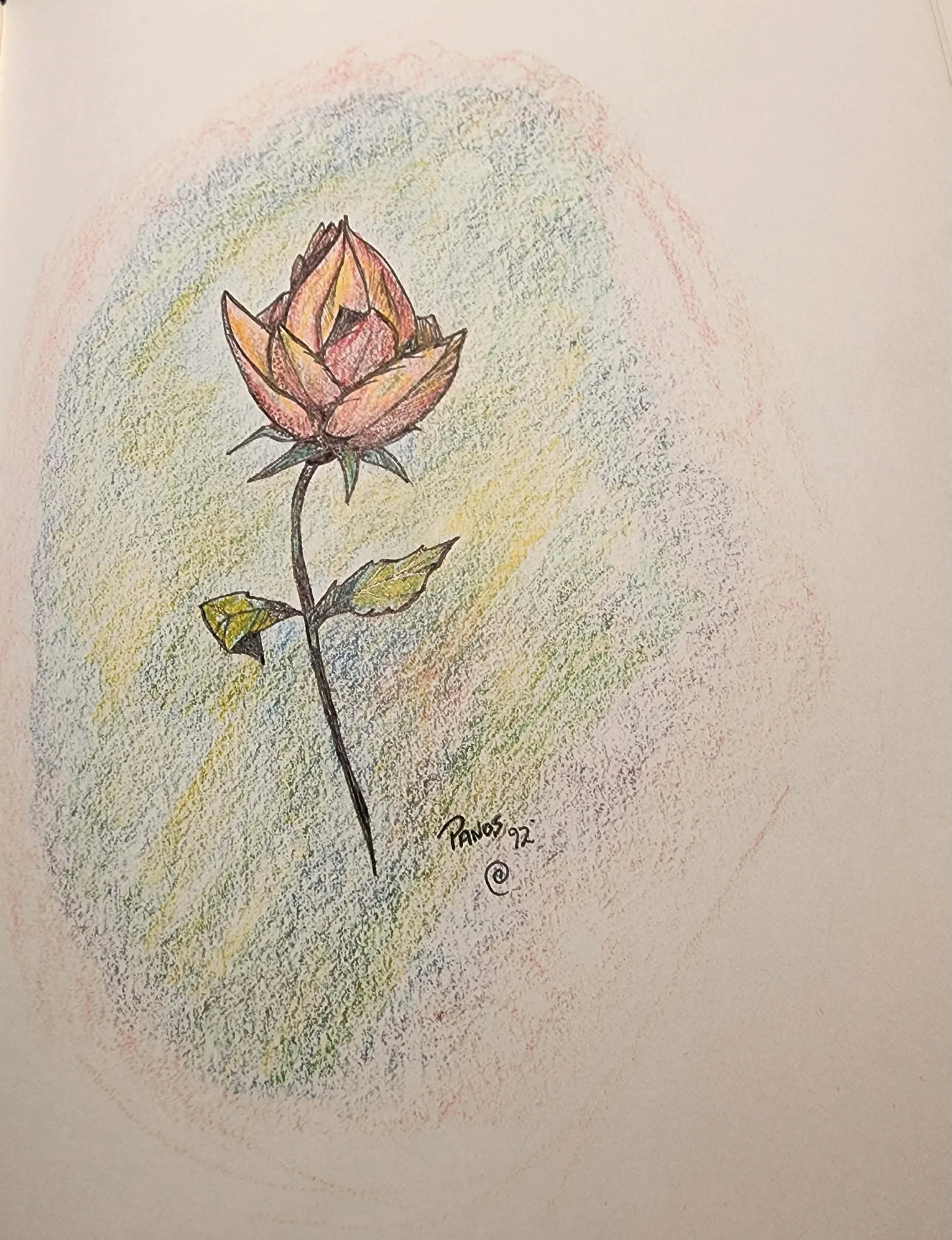
Drawing did not stay on paper. Sketch pads became structure. Structure became three-dimensional worlds. In the early two-thousands, I began building environments instead of just imagining them.
What had once lived only in lines and symbols started to take form as space. I was no longer only drawing places — I was learning how to stand inside them. Even then, I wasn’t trying to reproduce reality. I was trying to understand how imagined worlds could feel real.
Photography entered my life around 2011 and stayed with me until 2022. It became another way of translating atmosphere — not as documentation, but as interpretation. Through that work, some of my images were published in local papers during the Occupy Movement. For a brief moment, one image traveled farther than I ever expected, chosen for a Ruth Ginsburg dedication on a cable network — a small, strange fifteen minutes of visibility.
But even then, I was never chasing recognition. I was still searching for the unreal inside the real. The camera, like everything before it, was simply another doorway.
I began noticing changes in my sleep patterns. I was waking more often, never fully resting. Being Type 2 diabetic, I assumed my blood sugar was the cause. I adjusted. I monitored. I waited. I never anticipated what was to follow.
Sleep apnea did not arrive quietly. It came violently. Insomnia followed close behind. Sleep fractured. Breath became unreliable. Time lost its edges. Nights stretched into unfamiliar territories where thought no longer moved in straight lines.
It took three days for what I call my muses to push through.
What followed was not gentle.
It was an assault on the senses.
The muses did not whisper.
They tore into my world.
Images arrived without permission. Scenes layered themselves. Faces formed. Entire environments unfolded faster than I could record them. The border between memory, imagination, and perception dissolved.
I was no longer creating from choice.
I was creating from survival.
It wasn’t long before I would learn that insomnia, trauma, and prolonged wakefulness often push the mind into altered creative states. That art has long been used as a form of therapy for fractured sleep, emotional overload, and identity reconstruction. That even now, studies are beginning to explore how artificial intelligence can act as a mirror, a collaborator, and a stabilizing vessel for overwhelmed imagination.
I did not know any of this while it was happening.
I only knew that creating was the only way I could remain intact.
During this period, more than eighty thousand images emerged — not as projects, not as collections, but as overflow. It felt as though I had become a child again, returning to old haunts — to forgotten realms and to the paramythia — moving through worlds I had once only imagined. Entire landscapes formed faster than they could be named. Genres appeared. Realms separated. Motifs returned.
What exists here is not a gallery of outcomes.
It is a record of eruption.
It will take years to walk these worlds slowly, to understand their relationships, to learn which belong together and which must stand alone.
What you see now is not the sum.
It is the first clearing in a vast interior territory.
The Art of Artificial Art is not about technology.
It is about continuity.
It is about how a child drawing maps becomes an adult translating dreams.
It is about how insomnia fractures time and gives vision new permission.
It is about how ancient stories survive inside modern tools.
This is not a beginning.
It is a continuation.
This archive is not arranged to demonstrate completeness.
It is arranged to preserve coherence.
The works presented here were selected not for their polish, but for their ability to speak to one another across time, medium, and intention. Some belong to worlds already forming. Others remain fragments awaiting their companions.
Nothing here is final.
Everything here is deliberate.
This collection will continue to change — not to correct itself, but to understand itself more clearly.
What you are walking through is not an exhibition of outcomes.
It is an exhibition of becoming.
Contact me
Thank you for visting and stepping into my Insomiac journey. watch for updates—Leave me a message, your words are alway welcome